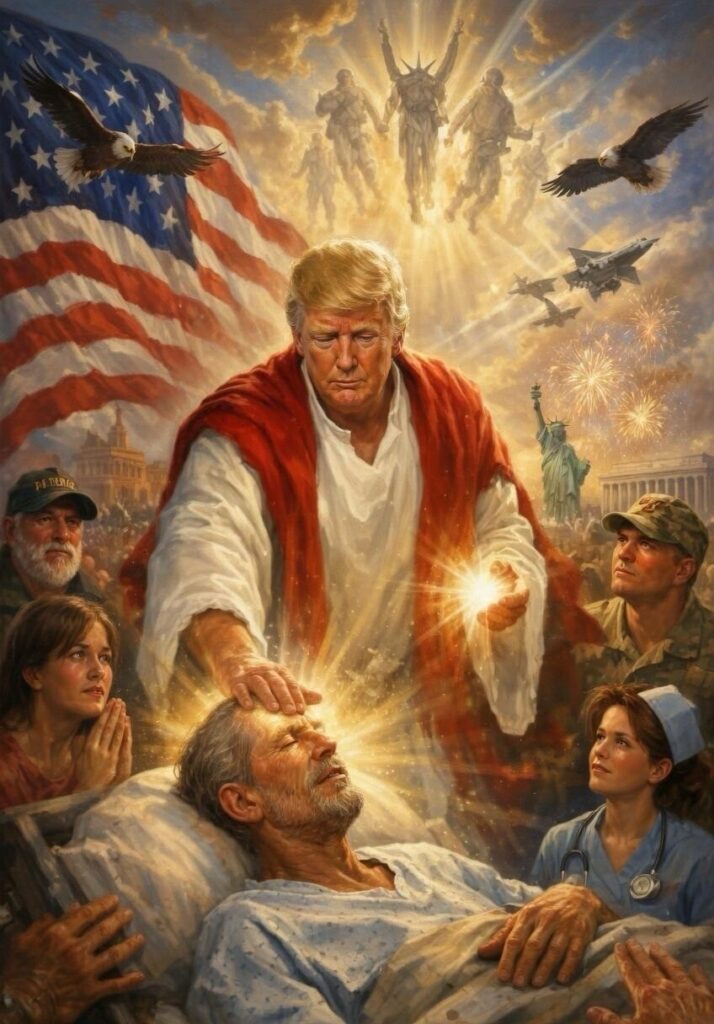
“Political Power vs Moral Authority: Trump’s Remarks on the Pope”
The recent remarks made by Donald Trump about Pope Leo XIV have sparked a significant global controversy, highlighting the delicate balance between political authority and moral leadership. In an era where social media serves as a primary platform for communication, statements made online can quickly influence public opinion and international discourse.
The dispute began when the Pope emphasized peace, diplomacy, and restraint in response to rising global tensions. His message reflected the traditional role of religious leadership in promoting harmony and ethical responsibility. However, Trump responded critically, suggesting that such an approach was ineffective in dealing with serious geopolitical challenges. His remarks appeared to favor strong and decisive action over dialogue and negotiation, thereby creating a sharp contrast between the two perspectives.
The situation escalated further when Trump shared content that many perceived as controversial, including imagery that was considered inappropriate by religious communities. This intensified the debate, as critics argued that such actions showed a lack of respect for deeply held beliefs. Supporters, on the other hand, defended Trump’s right to express his views freely, interpreting his comments as part of a broader political stance rather than a direct attack on religion.
This incident has drawn mixed reactions from around the world. Religious groups expressed concern over the tone and nature of the remarks, while political analysts pointed out the potential impact on international relations and public sentiment. The controversy also underscores the growing power of digital platforms in shaping narratives, where even a single post can lead to widespread discussion and division.